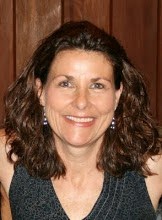
It was 4am when I drove up to the shelter to pick her up. Four in the morning, not unlike the countless numbers of times her husband would wake her in the night to abuse her and not unlike the last time when she awoke to the sound of the gun being cocked and felt the cold metal on her face. How she managed to talk him out of killing her that night, I can only guess because she never said, she just cried for the first week I saw her in the shelter.
She’d been there a month and sometimes she smiled now, especially with her two toddlers who also seemed to be feeling the cloud of abuse lifting, even in the close and crowded conditions of the battered women’s shelter. Then her demeanor seemed to change, she was so quiet all the time, my heart hurt for her through her shyness. Something was wrong and finally she told me, she was pregnant. The last year had been a blur of rape and abuse by her husband, who was stationed at the local military base. He had seen his father abuse his mother all his young life, culminating in his shooting her in front of him, his young son.
This morning we were heading to Wichita, a decision she agonized over for many days. She got in the car and we headed down the Kansas Turnpike. She sobbed quietly in the dark. In my early twenties, I could not comprehend all that she was going through. I could not even imagine the hell in which she had been living.
Dr. Tiller’s office was on Kellogg. We had to arrive early and the process would take most of the day. I knew this was a very, very sad day for her. I was only a witness to her pain, trying to keep her grounded in the world so that there might be a tomorrow for her and her young boys.
My religious upbringing included the idea that only God could judge us – no man could cast judgment on another (lest he be judged). At the kitchen table of my New York born and bred black Irish grandmother I learned a mixture of love, spirituality and common sense. She lit candles in church for the “poor souls in purgatory.” She loved the God she worshipped and I think believed that her praying for those who made mistakes was what we were meant to do. No judgment, just prayer.
Scott Roeder judged another and took his life. Now I struggle to not judge his actions as he had judged another. George Tiller was in church. His family, his God, his pastor, did not judge him.
At the end of a very long day we drove back to Manhattan while she sobbed sometime uncontrollably and I had to pull over and hold her, to the battered women’s shelter. When we got in the door she hugged her sons so tightly, their lives, just beginning again.
Tuesday, February 2, 2010

Tuesday, December 15, 2009
Why I Have Children...
Rushing home at lunch today to make chili for this evening’s dinner, the thought that came to me was my life would be far different if I didn’t have children. Most days, I can’t get home at the noon hour, but when I can it feels like a reward. Chili seemed like the perfect meal on a frigid day. As I stirred the chili, in between bites of a sandwich I thought: without children I would be at least $500 richer each month in child care alone. Without children I would probably be thinner, going to the gym when I rush out of work at night instead of going to the grocery store for milk and bread like I did yesterday. Without children I would live in a smaller house, have less bills, more free time.
My revelry was interrupted by the site of my 10 year olds Christmas list. Printed in the neatest of her handwriting (it has always been a struggle for her) on copy paper, it begins with “yellow leggings.” “Leg warmers, black boots, smell-good lotion and brownish red lip gloss” are on the list with a “flip video thing” (“pink if they have it”) a head band (“a summery one, not a winter one”) and “v-neck shirts, not white.” Rounding out the list on the bottom is “Buttons (the dog) List” and includes a “chew toy, a bone and a sock.”
I chuckled to myself. Without children I would never have that laugh that touched my heart when I read the list. I would never have the memory of my oldest who used to say when I was quiet with her “Are you mad to me?” And if I said no, would say, “Are you sad to me?” I wouldn’t have the quick goodbye hugs in front of friends, or the sitting on the lap while watching TV (or the fights they had over who got to sit next to me until I sat in the middle). I would never have the lullabyes I sang to them or them to me when they were little, or the Christmas mornings full of excited faces and toys. I would never have the little hands that gripped my finger or the moments when we all fell asleep on the couch together.
I sighed. Maybe the weight gain is not so bad, they are getting older now and maybe I will be able to get back into an exercise regime soon. I guess I can apply that commercial about things costing so much and then other things being priceless to our lives. As a mom I am tired a lot of the time, I am always trying to catch up on my sleep, my friends, my exercise, my bank account. But when it comes to Christmas lists and hugs and kisses, I am way ahead of myself. And it’s great.
Sunday, November 29, 2009
Unsung (S)heros
Saw the movie “Blind Side” Thanksgiving weekend and thought about all of the women I have met and worked with in my life that are out there, changing the world, one day at a time. While it sometimes looks like they are just having fun, and their pictures end up more on the society pages than on the front page, they are the ones who make our world a better place.
These women, they really are the news of the day, making the world a little better, not just around the holidays or during an event, but all the time. They are the fabric upon which many a charitable organization does its good works. These women never earn a salary but they contribute far greater stuff.
Years ago, when I worked in a battered women’s shelter, I would drive up and see the BMW or a Jaguar parked at the curb. Those cars looked strangely out of place until they didn’t. Whether it was answering the phone or driving a child to school or planning the next fundraising event, these women were there, changing the world for the thousands who crossed the path of our Center.
Today, I work with an equally wonderful cadre of women who contribute their time, talent and treasure. The annual fundraising events that shares with the community the good works of this or that charity and raises money so that the next generation of children won’t live like this is always precisely run by these silent (s)heros. Our whole system of charitable organizations would cease operation if it weren’t for the women who step in like the woman who sheltered and nurtured Michael Oher. It isn’t always easy, to give of yourself freely, to work tirelessly for no pay and very little recognition. Today, thinking about all of these unsung heroes who have made me a better person, in addition to contributing to all of the organizations through which I worked, I am very grateful.
Monday, November 23, 2009
Confidence
That panicky feeling took over. The rendezvous point for my daughter in middle school was her former elementary school. My younger daughter was out there waiting, but where was her sister? We circled back in the car to her middle school, to the park where she often waits for a while with other friends who walk from the middle school to the elementary school. Not there. Ugh!
What to do? Breathe. “Let’s head up toward home, there is only one street she can follow,” I say to my younger daughter who is sensing my panic. We start up the street, a couple blocks and no sign of her. Then, I see her, a block or so away, jacket strung across her backpack (it was a chilly day), that familiar gait of her long legs. Relief!
I pull over, she smiles. I breathe.
“Mom, I feel so good about myself, I knew where I was going. Are you mad?”
“No! I was worried about you! I am so glad you are safe.”
“Mom, I knew how to get home, I knew I could do it.”
Confidence to know where we are going, is it something learned or is it something with which we are born? Sometimes I think it is the small things that remind us of who and what is within us. Throughout most of her life, I had never heard my daughter sound that confident. She espouses a lot of “knowing” I think mostly to annoy her younger sister. But that place of speaking out with your whole voice, that voice of confidence, I was pleasantly surprised to hear it coming from her.
Knowing is confidence. Sometimes we don’t trust what we know. That still small voice in us says something, and we say “sshhhhh, I don’t want to hear that.” Or we hear the override from the world which tells us we don’t know what we think we know. Those tween years, that’s when the inside voice begins to lose its power. This was a good day for my daughters and I. We all got to see the strength of the inside voice that knows. Here’s to hoping my daughter can hang on to her own voice as the voices of friends and others begin to gain volume in her world.
Tuesday, October 13, 2009
Rewarding the Care Voice in Economics
Elinor Ostrom and Oliver Williamson won the Nobel prize for Economics. The headlines start with the remarkable fact that since 1969, when the prize was first awarded, a woman has never won. More interesting, it seems, is the nature of the work that Williamson and Ostrom were doing and its contribution to what we believe about the way people behave when it comes to commonly owned or used “stuff” and/or when resources are scarce.
After the economic meltdown, many decried the way that people, particularly men on Wall Street and in financial institutions had used the market and other people’s money for their own gain. The NY Times reported that the committee, was highlighting “the shortcomings of an unregulated marketplace, in which “economic actors,” left to their own devices, act in their own self-interests”…and the theory that “in doing so, (it) will enhance everyone’s well-being.”
What Ostrom and Williamson and people like Rosabeth Moss Kanter in her book World Class, point out is that the market can be influenced by relationships and behaviors that develop among companies that are competitors but find ways to resolve together common problems. Ostrom’s work focused on common properties like lakes, pastures, woods and ground water basins. Her observations and research found that resource users can and do create sophisticated rules to address basically, something we learned as children – how to share. Williamson, in his work, focuses on the propensity of firms (organizations) to work together when there are limited resources. (Firms are more likely to cooperate and solve problems together.)
The work of these two individuals and many others like them (for a really great read on how companies and cities have worked together to address common problems, read Kanter’s book) point to the care voice that has always been present in our world, but often gets scant attention. This voice, often socialized into girls and women, is alive and well in our marketplace; it is just that we sometimes don’t call it out as a positive force for good. Often, we trivialize the importance of working together, sharing and addressing scarce resources and believe we have to regulate sharing through interventions by governments or larger corporations. The research of these two economists, points out that sharing is not only possible, it leads to positive outcomes. We need the care voice in our world. Hurray for the Nobel Committee for calling it out!
Thursday, October 1, 2009
Girls Soaring
Why does the thrill of soaring have to be preceded by the fear of falling? Good public speakers, athletes, and actors all talk about that initial anxiety that accompanies the speech, the event, the play. I have heard it said that just a little of that anxiety can help you create the edge you need to push yourself to the next level. Once, while taking a class in self defense, we were told to “feel the fear and do it anyway.” That is a good lesson to learn when you are trying to overcome something; in this case, old patterns and scripts of being unable to defend yourself.
As girls are socialized, they come to an edge of knowing and not knowing themselves. Before my eyes I, am watching my 11-year-old try on new “selves.” Last year as a fifth grader, she was somewhat reserved around others and very judgmental of teachers who she did not feel were in integrity. This year, she observes the passion in her English teacher for a book he likes. She tells me, “It would be like me talking about the books I really like, mom. He just goes on and on about this book.” She doesn’t like the book and thinks it is boring. Last year, she would have resisted completely, dug her heals in and chosen not to participate. This year, she is plodding through, reading the book and doing the assignments.
Looking at the canon of works they are reading, I am saddened to see there are no women authors. There are few men of color. I want to push back on this edge, even though she has backed away from it. Her conformity comes with her socialization. As her mom and as a woman in this culture, I know she has to conform. She can’t step out and fly off this ledge. She has to be successful in school and to be successful she has to accept the canon of books as the best of the best, even though she will not see herself reflected in it. She must deny the voice inside herself that wants to demand a book that engages her and connects her.
To soar as women sometimes means to leave the comfort of the group, to challenge the status quo, to speak out when something doesn’t feel right. Sometimes we don’t even recognize any more what we accept as true, even though it may not be true for ourselves. Raising daughters, watching them, I see those edges and have to trust that eventually, my daughters will know when to soar.
Tuesday, September 8, 2009
Women as Consumers
In the September issue of the Harvard Business Review, there is a article about women consumers (The Female Economy. http://hbr.harvardbusiness.org/2009/09/the-female-economy/es) Women control more than $20 trillion in consumer spending and represent a market larger than China and India combined. As a state, we could do so much more to encourage businesses not only to address women’s needs, but also to encourage women’s businesses.
Recently, Oklahoma City Chamber of Commerce took a trip to China to open up trade. All the while, Oklahoma is 46th in the nation as a great place for women to live and work. (Center for Women Policy Studies) I wonder what would happen if some of the energy we are using to seek new markets across the seas, could be focused on satisfying women’s needs locally, we would build a better state as well as create more prosperity for our companies.
The authors of the HBR article, Michael Silverstein and Kate Sayre, talked to women consumers and found that most women feel “vastly underserved. Despite the remarkable strides in market power and social position that they have made in the past century, they still appear to be undervalued in the marketplace and underestimated in the workplace.” Surveying 12,000 women, the authors concluded that “women not only will represent one of the largest market opportunities in our lifetimes but also will be an important force in spurring a recovery and generating new prosperity.”
Whether nature or nurture, women’s lives are different than men’s. We are responsible for the most part, for children, for care of our elderly parents and for housework. In the U.S. women reported that they do approximately 66% of all of the home chores. We do see the world differently-- often leaning more toward the importance of not leaving anyone out and caring about our environment.
In the survey that the Girl Scout Research Institute did before and after the election, girls see leadership as connection and relationship building, while boys aspire to power over. Post election, girls and boys both saw how hard it is to get recognition for your leadership skills if you are female. Girls gravitate toward making the world a better place. As the authors of the HBR article point out: “Women seek to buy products and services from companies that do good for the world, especially for other women. Brands that—directly or indirectly—promote physical and emotional well-being, protect and preserve the environment, provide education and care for the needy, and encourage love and connection will benefit.”
In a recent guest editorial I did for the Oklahoman, I wrote that “allowing women access to positions of power also creates benefits for companies and communities. Recent economic studies bear this out. Pepperdine University found that Fortune 500 companies with the best records of putting women at the top were 18 – 69% more profitable than the median companies in their industries. Sixty-nine percent! It would be foolish not to consider having women either in the C-suite or on your company’s board with numbers like that.”
“But it is not just this Pepperdine study. McKinsey looked at European countries and found that the companies with greater gender diversity in management had higher than average stock performance. Catalyst, a research firm found that Fortune 500 companies with just 3 or more senior women managers scored higher on top measures of organizational excellence. Companies with 3 or more women on their boards outperformed their competition by 40%.”
Women as consumers and/or women as workers: our world is changing and businesses and corporations need to change with it. Not just for women, but for all of us.
Subscribe to:
Posts (Atom)